
2D Game Art for Mobile Games and Applications. Visual Assets.
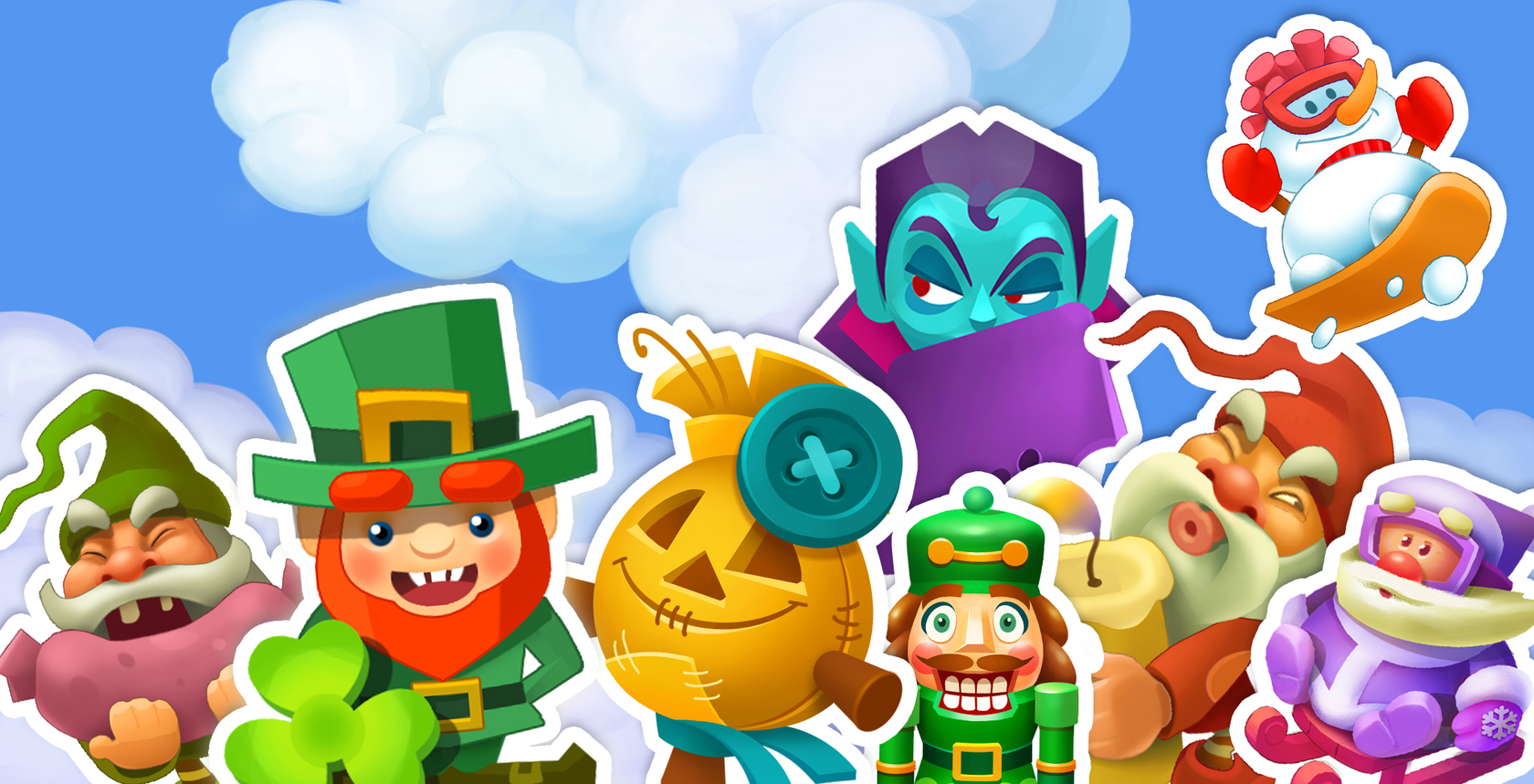
Graphics for Mobile and PC Games
Why high-quality graphics matter and how the art that delights our users is created.
Creating a 2D character for a mobile game is not just about drawing a pretty picture. It’s a complex, multi-stage process at the intersection of art, technology, and psychology. The quality of your character design often determines the success of the entire game, as players will identify with and relate to this character.
The process can be divided into several stages. In this article, we’ll focus on the stage of creating and bringing the character to life. It all begins with concept and design — the birth of an idea. And here comes the question: “Who is this character and how do we want to portray them?”
First, we define the game’s genre — will it be a platformer, RPG, puzzle, or strategy? Then we analyze the target audience and gameplay. A character for a hardcore strategy game will be completely different from one for a casual project. Next, we create a document describing the character’s personality, age, background, motivations, and key traits.
At this stage, all the details are refined: costume elements, accessories, and clear, readable colors. Multiple views are prepared (front, side, and sometimes back), which help the animator later.
Creating a 2D character is a journey from an abstract idea to a fully realized digital actor living in your smartphone. It’s a collaborative effort where the game designer, concept artist, animator, and programmer merge their skills. And when a player effortlessly swipes the screen to make the hero perform a perfect jump, that moment becomes the ultimate reward for the entire development team.
And here come the first sketches during the search for the character’s look. The artist creates numerous quick drafts, experimenting with shapes, silhouettes, and proportions. It’s important that the character is recognizable even by its silhouette — the famous “silhouette test.” Once the character’s design is established, we work on the color palette. Colors carry meaning: red can signify aggression or passion, blue represents calm or magic, and green evokes nature or poison. The palette should be bright but not overloaded, ensuring it looks good even on a small screen.
After the concept is approved, the artist produces the final character artwork in a pose perfectly suited for future animation — the so-called T-pose or A-pose (arms slightly extended to the sides).

Creating a 2D character is a journey from an abstract idea to a fully realized digital actor living in your smartphone. It’s a collaborative effort, where the skills of the game designer, concept artist, animator, and programmer come together as one. And when a player effortlessly swipes the screen, making the hero perform the perfect jump, that moment becomes the ultimate reward for the entire development team.
